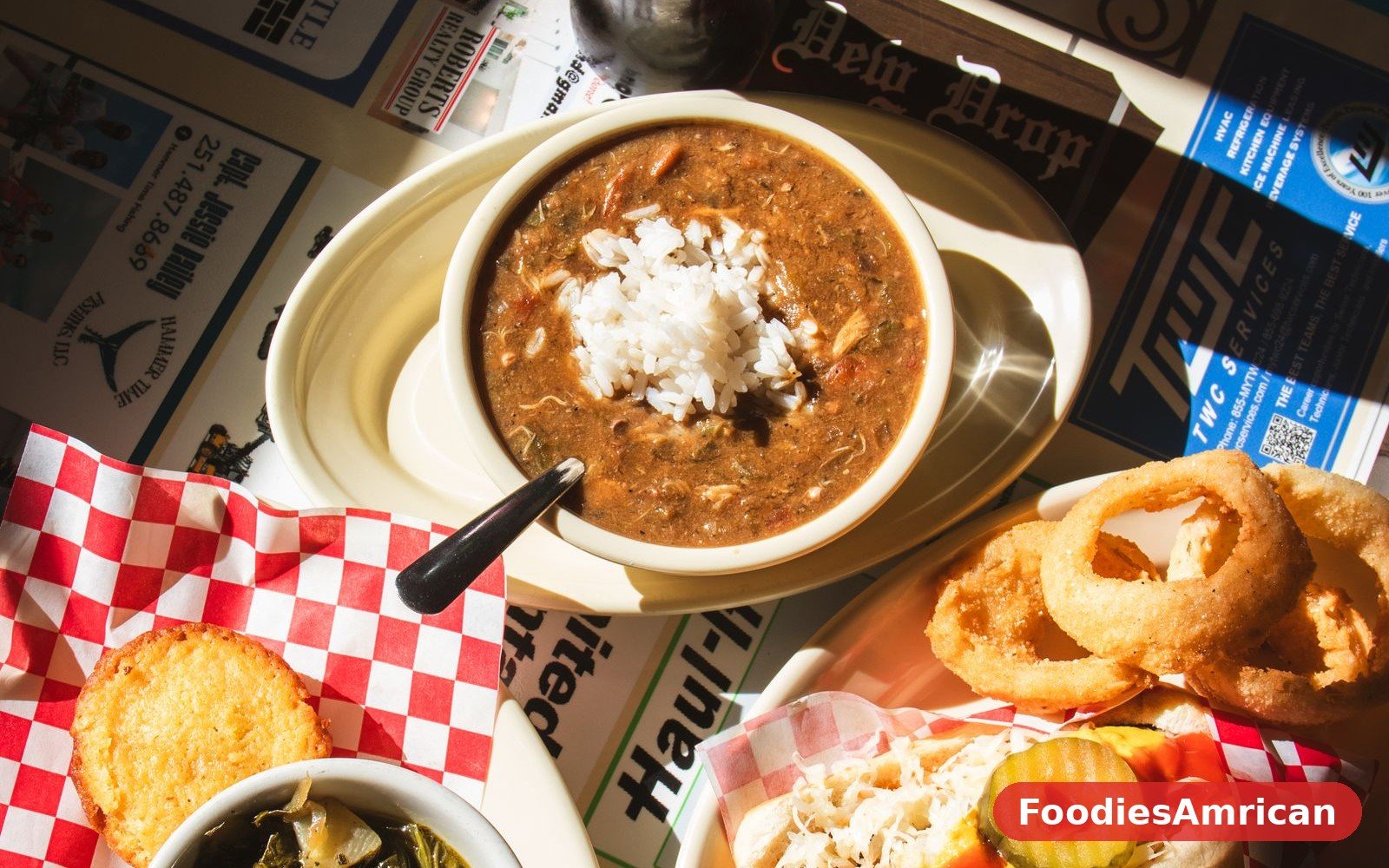
Chicken and Sausage Gumbo
There is a moment in every good gumbo when the whole kitchen changes. It happens about halfway through the roux, when the flour and oil stop smelling like raw flour and start smelling like toasted pecans, and you realize the pot in front of you is going to be something special. This chicken and sausage gumbo is built around that moment. It is dark, rich, a little smoky, and deeply comforting, the kind of pot you put on in the afternoon and let bubble away while the house slowly fills with the smell of Louisiana.
I did not grow up making gumbo. My first pot was a pale, hurried thing, more like chicken soup with a sausage problem, and I remember thinking that was just how gumbo was. Then a friend from Baton Rouge stood over my stove, shook her head at my blonde roux, and told me to keep stirring. Ten more minutes, she said, and then ten more after that. What came out of that pot was a different dish entirely, dark as coffee, thick enough to coat a spoon, and so full of flavor that I have been making it her way ever since. The lesson stuck with me: gumbo rewards patience more than it rewards skill, and the roux is where the patience pays off.
What makes this version worth cooking is the balance. The chicken goes in browned and comes out falling apart, the andouille sausage brings smoke and a gentle heat, and the okra thickens the pot just enough while adding its own earthy flavor. The holy trinity of onion, bell pepper, and celery melts into the background, and the whole thing simmers until the flavors stop tasting like separate ingredients and start tasting like gumbo. Serve it over a mound of hot rice with a shake of hot sauce on top, and you have a meal that feeds a crowd and tastes like you worked on it all day, even though most of the time it was just simmering on its own.
This is a weekend pot, not a weeknight rush job, but it is not difficult. One heavy pot, one wooden spoon, and about two hours, most of it hands-off. Make it once and you will understand why gumbo shows up at every Louisiana gathering worth attending, from Mardi Gras parties to quiet Sunday suppers. It is the kind of cooking that turns a regular evening into an occasion, and the leftovers are somehow even better the next day.
Why You’ll Love This Recipe
First, the flavor is deep in a way that few one-pot meals manage. The dark roux is the foundation, and it brings a nutty, almost chocolatey richness that you cannot get from a shortcut. Everything else is layered on top of it: browned chicken, smoky sausage, sweet peppers, and a slow simmer that pulls it all together. The result is a stew that tastes like it has been cooking for hours, because it has, and there is no faking that depth.
Second, it is a true one-pot meal that feeds a crowd. One batch makes eight generous servings, and it scales up easily if you have a bigger pot. It is the dish I make when people are coming over and I want to actually enjoy the evening instead of standing at the stove the whole time. Once the pot is simmering, you are mostly free, and the gumbo only gets better while you wait.
Third, this recipe is flexible in the ways that matter. No andouille at the store? A good smoked sausage works. Not an okra fan? You can leave it out and let the roux and a longer simmer do the thickening. Want it spicier? Add more cayenne or a chopped jalapeño with the trinity. The bones of the recipe, the roux, the trinity, the long simmer, stay the same, and everything else bends to what you have and what you like.
And finally, it is a meal that brings people to the table. There is something about a big pot of gumbo in the middle of the table, steam rising, rice ready, hot sauce passed hand to hand, that makes dinner feel like an event. It is the kind of food that slows everyone down and gets people talking, and that is worth as much as the flavor.
Ingredients You’ll Need
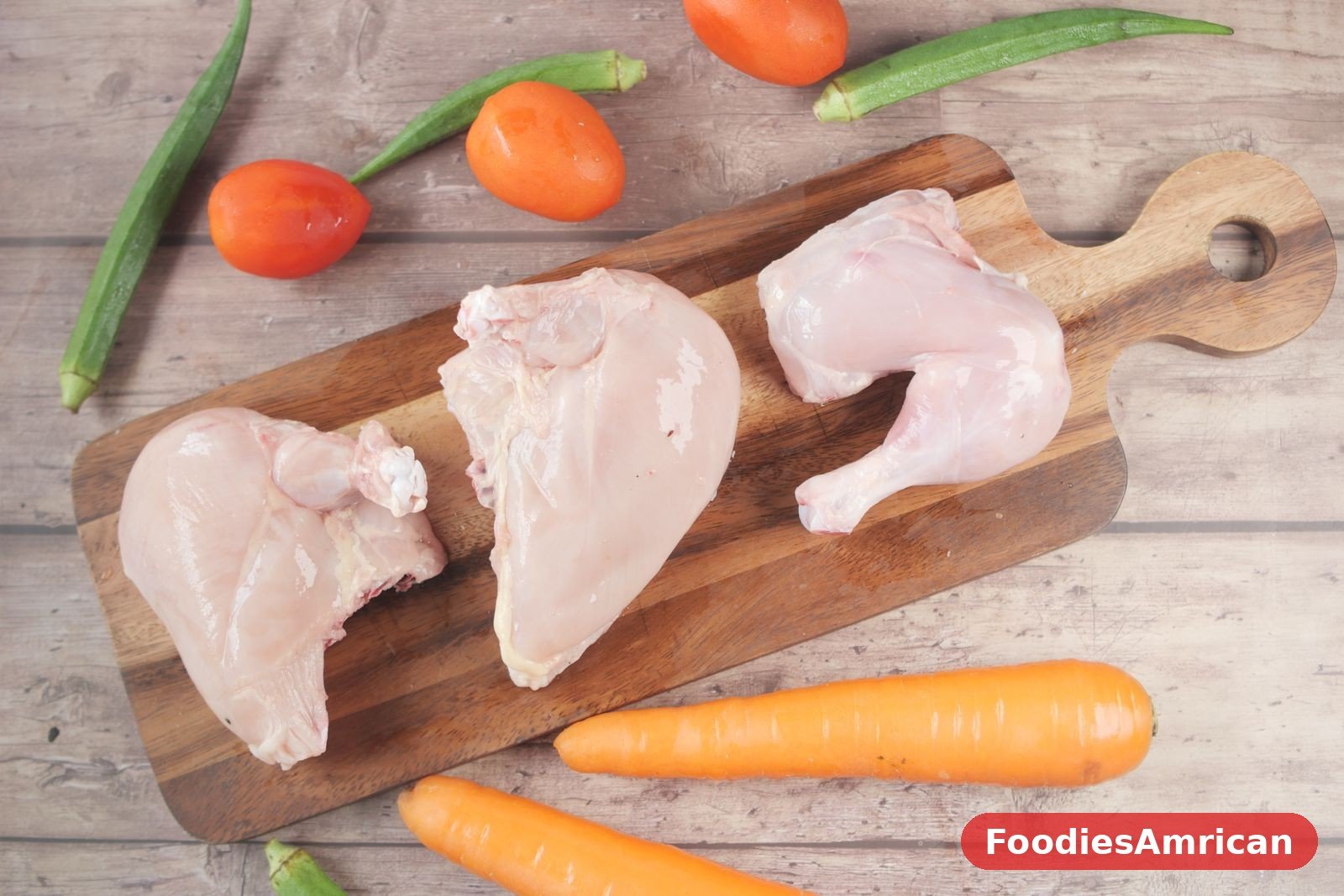
- 1 1/2 pounds boneless, skinless chicken thighs
- 12 ounces andouille sausage, sliced into 1/4-inch rounds
- 3/4 cup vegetable oil
- 3/4 cup all-purpose flour
- 1 large yellow onion, finely diced
- 1 large green bell pepper, seeded and finely diced
- 3 celery ribs, finely diced
- 4 garlic cloves, minced
- 8 cups low-sodium chicken stock, warmed
- 1 can (14 ounces) diced tomatoes, drained
- 2 cups sliced fresh or frozen okra
- 2 bay leaves
- 1 tablespoon Cajun seasoning
- 1 teaspoon smoked paprika
- 1/2 teaspoon dried thyme
- 1/4 to 1/2 teaspoon cayenne pepper, to taste
- 1 teaspoon kosher salt, plus more to taste
- 1/2 teaspoon black pepper
- 1 tablespoon Worcestershire sauce
- 1/2 cup chopped fresh green onions
- 1/4 cup chopped fresh parsley
- Hot cooked white rice, for serving
- Hot sauce, for serving
How to Make Chicken and Sausage Gumbo
Start by browning the chicken. Season the thighs all over with a teaspoon of the Cajun seasoning, half a teaspoon of salt, and the black pepper. Heat a tablespoon of oil in a large, heavy pot or Dutch oven over medium-high heat and sear the thighs for about four minutes per side, until they are well browned. They do not need to be cooked through yet, they will finish in the pot. Move them to a plate and set them aside. In the same pot, brown the sausage slices for three or four minutes, until the edges crisp a little and the fat renders out. Scoop the sausage out with a slotted spoon and set it aside with the chicken, leaving the drippings in the pot. Those drippings are flavor, and you want them in the roux.
Now comes the roux, and this is the part to take seriously. Turn the heat down to medium and add the remaining oil to the pot, then sprinkle in the flour a little at a time, whisking constantly so it blends smoothly with the oil and the sausage drippings. Once it is all in, switch to a wooden spoon and keep stirring, and I mean keep stirring, scraping the bottom and the corners of the pot so nothing catches. For the first ten minutes it will look pale and smell like flour. Then it turns the color of peanut butter, and the smell changes, warm and nutty. Keep going. You are aiming for the color of milk chocolate, or a little darker, like a copper penny, which usually takes twenty-five to thirty-five minutes of steady stirring. If you see black specks or smell anything burnt, the roux is ruined, and there is no saving it. Throw it out, wipe the pot, and start again. It happens to everyone at least once, and it is better than serving a bitter gumbo.
When the roux reaches that deep brown, move fast. The hot roux will keep cooking, so add the onion, bell pepper, and celery all at once and stir hard. The vegetables will sizzle and steam, which is exactly what you want, and they will cool the roux down and stop it from darkening further. Cook the trinity for five or six minutes, stirring often, until the onion softens and turns translucent. Then stir in the garlic and cook for one more minute, just until it smells fragrant. This is the base of your gumbo, and it should smell wonderful already.
Pour in the warm stock a ladle at a time, stirring well after each addition so the roux dissolves smoothly instead of clumping. Warm stock matters here, because cold liquid hitting a hot roux can make it seize up. Once all the stock is in, add the diced tomatoes, bay leaves, the rest of the Cajun seasoning, smoked paprika, thyme, cayenne, and Worcestershire sauce. Return the chicken and sausage to the pot, along with any juices from the plate. Bring the pot to a gentle simmer, then turn the heat down low, put the lid on slightly ajar, and let it cook for an hour. Stir now and then, scraping the bottom, and keep the heat low enough that it barely bubbles. This slow simmer is where the gumbo becomes gumbo.
After an hour, lift the chicken out and shred it into bite-sized pieces with two forks. It should fall apart easily by now. Stir the okra into the pot and return the shredded chicken. Simmer for another twenty to thirty minutes, until the okra is tender and the gumbo has thickened to a consistency that coats the back of a spoon. Taste it now and adjust the salt, the cayenne, and the Cajun seasoning. Gumbo should be boldly seasoned, so do not be shy. Fish out the bay leaves and stir in the green onions and parsley right at the end, so they stay bright and fresh.
To serve, spoon hot rice into the middle of a wide, shallow bowl and ladle the gumbo around it, or mound the rice on the side, however your family does it. A bottle of hot sauce on the table is not optional in my house. The gumbo should be dark and glossy, the chicken tender, the sausage smoky, and every spoonful should taste like the pot it came from. That is the whole point.
Tips for the Best Gumbo
Do not rush the roux, and do not walk away from it. This is the single most important thing in the whole recipe. A dark roux takes time and constant stirring, and there is no shortcut that tastes the same. Put on a podcast, pour yourself something cold, and settle in with the wooden spoon. If your arm gets tired, hand the spoon to someone else, but do not leave the pot unattended. The difference between a good roux and a burnt one is about thirty seconds, and you need to be there for it.
Use chicken thighs, not breasts, for this recipe. Thighs have more fat and more connective tissue, which means they stay juicy through a long simmer and shred into tender pieces instead of drying out. Breasts will work if that is what you have, but add them later in the cooking time, about halfway through the simmer, so they do not overcook. Dark meat is simply better suited to a slow pot like this, and it is usually cheaper too.
Warm your stock before you add it to the roux. Cold stock can shock a hot roux and make it clump, and then you spend ten minutes whisking out lumps that did not need to be there. A few minutes in the microwave or a small saucepan is all it takes, and it keeps the gumbo smooth from the start. This is a small step that saves real frustration.
Season in layers and taste at the end. The Cajun seasoning goes in twice, once on the chicken and once in the pot, and the salt gets adjusted after the simmer, because the stock reduces and the flavors concentrate. Taste the gumbo before you serve it and ask yourself what it needs: more salt, more heat, a little more Worcestershire for depth. A gumbo that tastes flat usually just needs another pinch of salt and a few more minutes on the heat.
Let it rest if you can. Gumbo is one of those dishes that improves as it sits, and a pot made in the afternoon and reheated for dinner tastes more settled and more complete than one served straight off the stove. If you have the time, make it a few hours ahead, let it cool, and warm it gently before serving. The flavors marry in the meantime, and the texture thickens a little too.
Variations to Try
For a seafood version, keep the same roux and trinity, and add a pound of peeled shrimp and a cup of crabmeat in the last ten minutes of cooking, just until the shrimp turn pink. Seafood cooks fast, so do not add it early or it will turn rubbery. The sausage can stay or go, depending on your mood, and a little extra cayenne suits the seafood version well. This is the version I make when shrimp are on sale, and it disappears even faster than the chicken one.
If you want a spicier pot, add a chopped jalapeño or two with the holy trinity, bump the cayenne up to a full teaspoon, and finish with a generous shake of hot sauce in the pot itself, not just on the table. The heat builds slowly in a simmered dish like this, so add it in stages and taste as you go. You can always add more heat, but you cannot take it out.
For a filé gumbo, skip the okra and stir in a tablespoon or two of filé powder at the very end, off the heat. Filé is ground sassafras leaves, and it thickens the gumbo while adding a distinctive earthy, almost root-beer-like flavor. Never boil the gumbo after adding filé, or it turns stringy and unpleasant. Filé is a traditional thickener with a long history in Louisiana cooking, and it gives the gumbo a flavor you cannot get any other way. For more on how this dish developed, the history of gumbo is a good read.
For a lighter, weeknight version, use a jarred roux base and rotisserie chicken, and cut the simmer down to about thirty-five minutes. It will not have the same depth as the slow version, but it will still be a very good bowl of gumbo, and sometimes that is exactly what a Tuesday needs. Keep the sausage and the trinity, because those carry most of the flavor, and do not skip the green onions at the end. If you want another cozy chicken dinner for a busy night, our classic chicken and dumplings is the one to make.
And if you are cooking for someone who does not eat pork, swap the andouille for smoked turkey sausage. It brings a similar smokiness without the pork, and the gumbo is still rich and satisfying. Check the label, because some smoked turkey sausages are quite mild, and you may want an extra pinch of smoked paprika to make up the difference.
Serving Ideas
The classic way to serve gumbo is over hot white rice in a wide bowl, with the rice mounded in the center and the gumbo ladled around it. Some families mix the rice right in, some keep it separate, and both are correct, so do whatever feels right at your table. A scoop of potato salad on the side is a Louisiana tradition that sounds strange until you try it, and the cool, creamy potatoes against the hot, spicy gumbo are genuinely wonderful together.
For a full spread, add a loaf of crusty French bread for soaking up the pot liquor, and a simple green salad with a sharp vinaigrette to cut the richness. Cornbread is another natural partner, and our southern skillet cornbread is the one I make with this gumbo most often. The salty, buttery bread with a dark, smoky stew is the kind of pairing that needs no explanation.
If you are feeding a crowd, set up a gumbo bar: the pot in the middle, a rice cooker full of hot rice, hot sauce, sliced green onions, and a bowl of filé powder for anyone who wants it. People serve themselves, go back for seconds, and the whole thing feels like a party. Pair it with a cold beer or a tall glass of sweet tea, and dinner takes care of itself. For another crowd-pleasing pot, our one-pan beef chili with beans is a good second option for a big table.
And do not overlook the simplest serving of all: a bowl of gumbo, a spoon, and nowhere to be for an hour. Some meals are about the occasion, and some are about the quiet pleasure of a really good bowl of stew. This one is both, which is why it is worth the pot.
Storage and Reheating
Gumbo keeps beautifully in the fridge for four to five days, and the flavor actually improves after a night in the cold. Store the gumbo and the rice separately, in sealed containers, so the rice does not soak up all the liquid and turn to mush. Let the gumbo cool before it goes in the fridge, and do not leave it sitting out on the counter for more than two hours.
To reheat, warm it gently in a pot over medium-low heat, stirring now and then, until it is hot all the way through. Add a splash of stock or water if it has thickened too much in the fridge. Avoid the microwave if you can, because it heats unevenly and can make the sausage rubbery, but if that is what you have, heat it in short bursts and stir between them. Fresh rice, fresh green onions on top, and it tastes almost as good as the first night.
Gumbo freezes well too, for up to three months, but leave the rice out of the freezer container. Cool the gumbo completely, portion it into freezer bags or containers, and lay the bags flat so they stack. Thaw overnight in the fridge and reheat gently on the stove. The okra will be a little softer after freezing, but the flavor holds up, and a frozen container of gumbo on a busy night is one of the best things you can have in your freezer. If you like make-ahead chicken dinners, our smothered chicken with onion gravy freezes just as well.
Frequently Asked Questions
What is the difference between gumbo and jambalaya?
They are both Louisiana classics, but they are built differently. Gumbo is a stew, thickened with a roux and served over rice that is cooked separately, while jambalaya is a rice dish, with the rice cooked in the same pot as the meat and vegetables so it absorbs all the flavor. Gumbo is soupy and spoonable, jambalaya is fluffy and forkable. They share a lot of the same ingredients, the trinity, the sausage, the Cajun seasoning, but they eat like different meals entirely.
How dark should the roux be?
For this gumbo, aim for the color of milk chocolate or a copper penny, a deep reddish-brown. A lighter roux, the color of peanut butter, thickens more but tastes milder, and a very dark roux, the color of dark chocolate, brings more flavor but thickens less. Milk chocolate is the sweet spot for a chicken and sausage gumbo: plenty of nutty flavor and still enough thickening power. The key is to stir constantly and pull it off the heat the moment it reaches the color you want, because the hot pot keeps darkening it for a minute after you stop.
Can I make gumbo without okra?
Yes, absolutely. Okra is traditional in many gumbos, and it adds both flavor and thickening, but plenty of Louisiana cooks make gumbo without it. If you leave it out, let the gumbo simmer a little longer so the roux does the thickening on its own, or stir in a tablespoon of filé powder off the heat at the end. If the okra texture is what bothers you, use sliced fresh okra and cook it until it is fully tender, which takes most of the sliminess away. Frozen okra works fine too and is what I use most of the time.
What sausage is best for gumbo?
Andouille is the classic choice, because it is smoky, coarsely ground, and seasoned with garlic and spice, and it holds its shape in a long simmer. If you cannot find andouille, a good smoked sausage or kielbasa is the next best thing. Avoid fresh sausages like Italian sausage, which are not smoked and will not bring the same depth. Whatever you use, brown it first, because that step renders out fat and builds flavor that ends up in the whole pot.
Can I make gumbo ahead of time?
Gumbo is one of the best make-ahead dishes there is. Cook it fully, let it cool, and refrigerate it for up to five days, or freeze it for up to three months. The flavor gets better as it sits, so a pot made on Saturday tastes even better on Sunday. Store the rice separately, reheat the gumbo gently on the stove, and add the fresh green onions and parsley after reheating, so they stay bright. If you are planning a party, making the gumbo the day before is not a shortcut, it is the smarter way to do it.
How do I know when the chicken is done?
The chicken is done when it shreds easily with two forks and the thickest piece reads 165 degrees on an instant-read thermometer. In this recipe the thighs simmer for over an hour, so they will be well past done by the time you shred them, which is exactly what you want. If you are ever unsure about chicken doneness, the USDA safe temperature chart lists 165 degrees as the safe minimum for all chicken, and it is worth keeping bookmarked.