
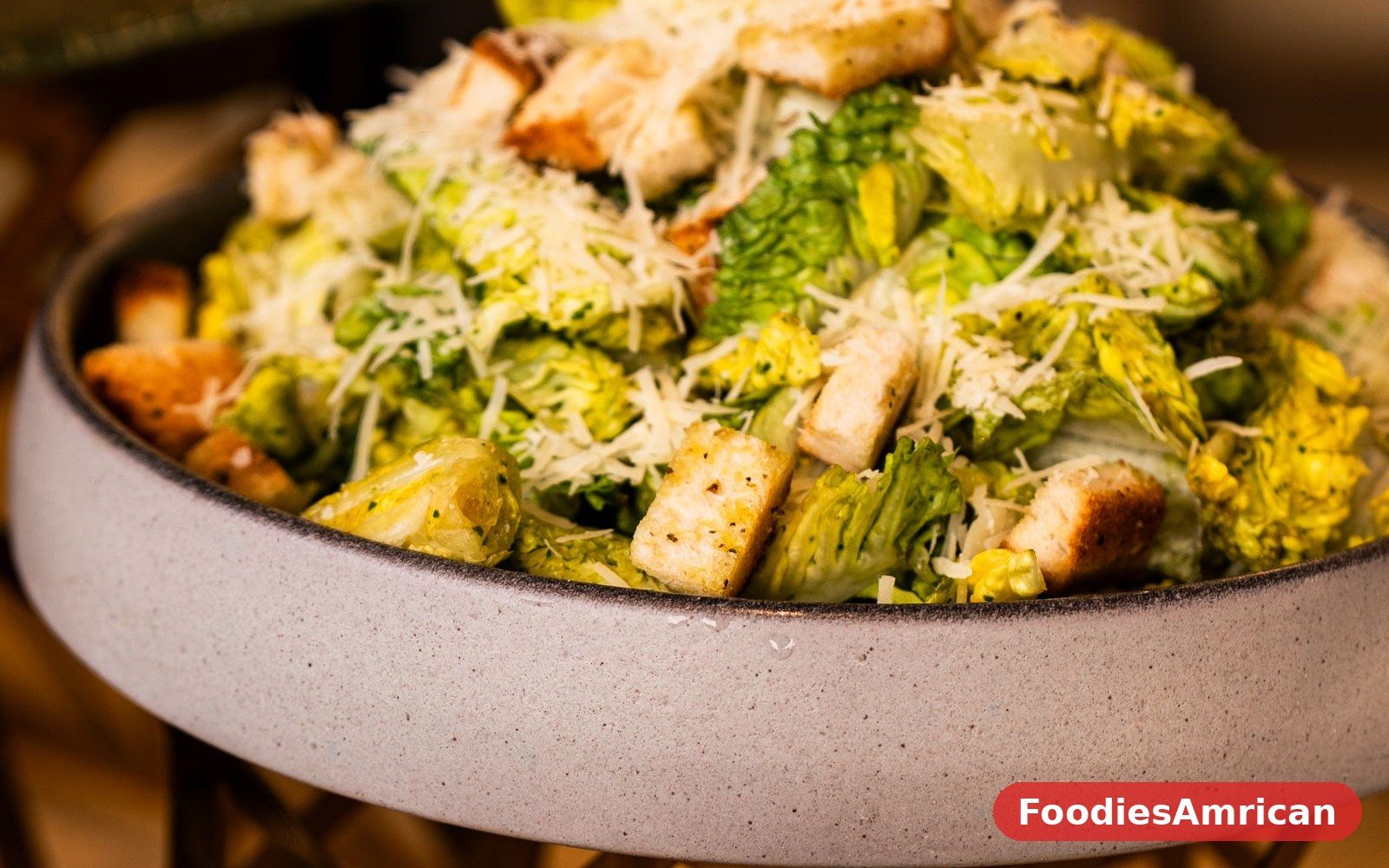
Classic Caesar Salad
Caesar salad is one of the most misunderstood dishes in American cooking. It shows up on nearly every menu in the country, and most of the time it arrives as a tired pile of limp lettuce drowned in bottled dressing, with a few sad croutons scattered on top. It is a pale shadow of what the salad is supposed to be. A real Caesar salad — made fresh, with crisp romaine, a proper homemade dressing, crunchy croutons, and good Parmesan — is an entirely different experience, and once you have had the real thing, the bagged version will never satisfy you again.
The story behind the salad is almost as good as the salad itself. It was invented in the 1920s by Caesar Cardini, an Italian immigrant running a restaurant in Tijuana, Mexico, who supposedly threw it together from what he had on hand during a busy holiday weekend. There was no chicken in the original, no kale, no bacon — just romaine leaves, a garlicky anchovy dressing, croutons, and Parmesan, tossed tableside with a bit of theater. That simplicity is the whole point, and it is why the salad has endured for a hundred years while a thousand fancier salads have come and gone.
What makes a Caesar salad great is not any single ingredient but the balance between them. The romaine must be cold and crisp. The dressing must be creamy but not heavy, salty and tangy and garlicky all at once, with the deep, savory note of anchovy in the background. The croutons must be crunchy all the way through, not soft in the middle. And the Parmesan must be real, shaved or grated from a wedge, not the powdery stuff from a shaker. When all four elements are right, the salad is more than the sum of its parts — it is one of the most satisfying things you can put on a plate.
This recipe walks you through all of it, including a homemade dressing that takes about five minutes and homemade croutons that take about fifteen. Neither is difficult, and both make an enormous difference. You can make the dressing ahead, you can make the croutons ahead, and you can have the whole salad on the table in twenty minutes. It is a side dish, a lunch, a dinner party starter, and — with a piece of grilled chicken on top — a complete meal, all in one bowl.
Why You’ll Love This Recipe
The first reason to love this recipe is the dressing, because a homemade Caesar dressing is one of the great small victories of home cooking. It is made from things you probably already have — garlic, lemon, mustard, Worcestershire sauce, anchovy paste, Parmesan, and oil — and it comes together in a blender or a bowl in about five minutes. The flavor is so far beyond anything in a bottle that you will wonder why you ever bought the bottled kind. It is creamy, tangy, garlicky, and deeply savory, and it clings to the lettuce in a way that bottled dressing never quite manages.
The second reason is the croutons. Homemade croutons are one of those things that sound like a fuss and turn out to be almost embarrassingly easy: cube some day-old bread, toss it with olive oil, garlic, and salt, and bake it until golden and crisp. The difference between these and the packaged kind is night and day — real crunch, real garlic flavor, and a buttery richness that makes the whole salad taste like it came from a restaurant. Once you have made them, you will never buy a bag of croutons again, and you will start finding excuses to put them on everything.
Third, this is a salad that actually fills you up and satisfies you, which is more than you can say for most salads. The romaine is substantial, the dressing is rich, the cheese is salty, and the croutons are hearty, so a big bowl of Caesar salad feels like a real meal rather than a penance. It is the salad for people who think they do not like salad, and it is the side dish that people actually ask for seconds of. That is a rare thing, and it is worth celebrating.
And finally, the recipe is quick, flexible, and endlessly useful. The dressing keeps in the fridge for days, the croutons keep in a jar for a week, and the salad itself comes together in minutes whenever you need it. It works as a starter for a dinner party, a side for a steak or a piece of fish, a light lunch on its own, or a full dinner with grilled chicken or shrimp on top. It is a recipe that earns its place in your regular rotation, and it is one you will make so often that you will soon stop measuring the dressing ingredients altogether.
Ingredients You’ll Need
- 2 large heads romaine lettuce, washed, dried, and chopped
- 1 cup salad croutons, homemade or store-bought
- 1/2 cup Parmesan cheese, freshly shaved, plus more for serving
- 3 large pasteurized egg yolks, at room temperature
- 2 garlic cloves, minced
- 2 tablespoons anchovy paste, or 4 anchovy fillets, minced
- 2 tablespoons fresh lemon juice
- 1 tablespoon Dijon mustard
- 1 teaspoon Worcestershire sauce
- 1/2 cup extra-virgin olive oil
- 1/4 cup freshly grated Parmesan cheese, for the dressing
- 1/2 teaspoon fine salt, plus more to taste
- 1/4 teaspoon black pepper, freshly ground
- 1/4 teaspoon hot sauce, optional
- 4 cups day-old bread cubes, for homemade croutons
- 3 tablespoons olive oil, for the croutons
- 1/2 teaspoon garlic powder, for the croutons
How to Make Classic Caesar Salad
Start with the croutons, because they need time in the oven and they are best when they have cooled completely before they meet the salad. Preheat the oven to 375°F and cut your day-old bread into cubes of about three-quarters of an inch. Day-old bread is ideal because it is a little dry already, which helps the croutons crisp up; fresh, soft bread will work, but it will take longer to dry out in the oven. Toss the cubes in a large bowl with the olive oil, garlic powder, and a good pinch of salt, making sure every cube is lightly coated.
Spread the cubes on a baking sheet in a single layer and bake for 12 to 15 minutes, turning them once halfway through, until they are golden brown and crisp all the way through. They should feel light and dry when you pick one up, with no softness left in the center. Let them cool completely on the pan — they will crisp up even more as they cool — and set them aside. If you are using store-bought croutons, you can skip this step, but the homemade ones are worth the fifteen minutes, and they will keep in an airtight jar for a week, so you can make a big batch and use them all week long.
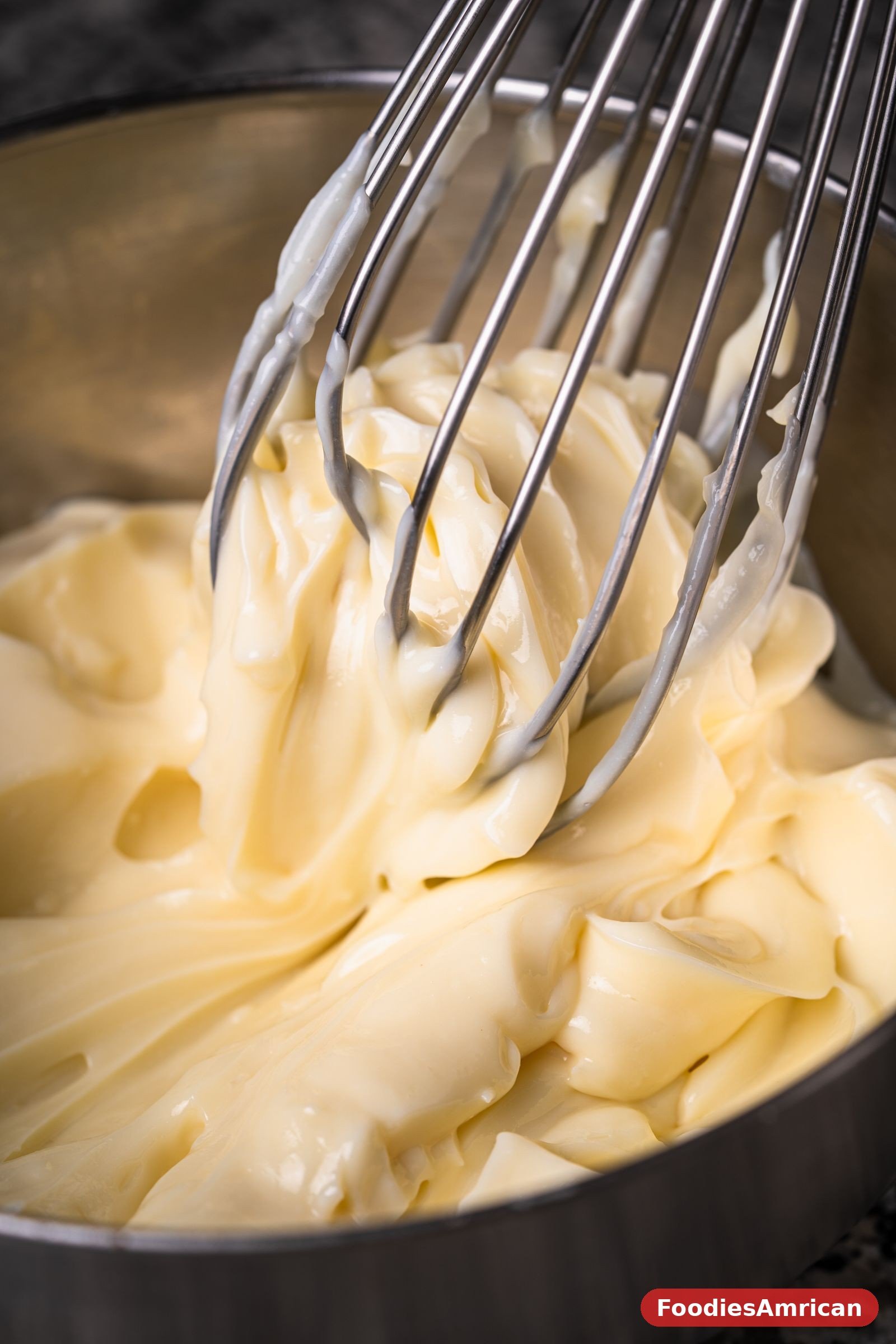
While the croutons bake, make the dressing. This is the heart of the salad, and it deserves your attention. In a blender or a food processor, combine the egg yolks, garlic, anchovy paste, lemon juice, Dijon mustard, Worcestershire sauce, salt, pepper, and hot sauce if you are using it. Blend for about thirty seconds, until the mixture is smooth and pale. Then, with the blender running on low, drizzle in the olive oil in a slow, steady stream. This slow addition is what creates the emulsion — the thick, creamy texture that makes the dressing cling to the lettuce instead of sliding off. Pour the oil too fast and the dressing can break, so take your time and let it drizzle.
Once all the oil is in and the dressing is thick and glossy, stop the blender and stir in the grated Parmesan. Taste the dressing now, and adjust it: more lemon juice if you want it brighter, more anchovy paste if you want it saltier and more savory, a little more salt if it tastes flat. The dressing should be bold — creamy, tangy, garlicky, and unmistakably savory. Remember that it will be spread over a large pile of plain lettuce, so it needs to be assertive. If it is thicker than you like, whisk in a teaspoon of water at a time until it loosens to a pourable consistency.
Now wash and dry the romaine. This step matters more than it sounds, because wet lettuce dilutes the dressing and makes the salad soggy, and limp lettuce makes a limp salad. Wash the leaves in cold water, then dry them thoroughly in a salad spinner or by patting them with clean kitchen towels. Tear or chop the leaves into bite-sized pieces — not too small, because you want the salad to have substance — and put them in a large, wide salad bowl. A wide bowl is better than a deep one, because it gives you room to toss without bruising the leaves.
To assemble, drizzle about two-thirds of the dressing over the romaine and toss gently with clean hands or a pair of tongs, lifting and turning the leaves so every piece gets a light, even coating. You can always add more dressing, but you cannot take it away, so start with less than you think you need. Add the croutons and the shaved Parmesan, toss once more, very gently, and taste a leaf. Adjust with more dressing, a squeeze of lemon, or a pinch of salt if it needs it, then serve immediately — a Caesar salad waits for no one, and the croutons will start to soften within minutes of meeting the dressing.
Tips for the Best Caesar Salad
Dry lettuce is the foundation of a good Caesar salad, and it is worth being thorough about it. Wet leaves will not hold the dressing, and the salad will end up watery at the bottom of the bowl. A salad spinner is the best tool for this, and if you do not own one, patting the leaves dry between clean kitchen towels works well too. If you have time, wash and dry the romaine an hour ahead and let it chill in the fridge in a bag lined with a paper towel — cold, dry, crisp lettuce is the goal, and it makes a noticeable difference.
Use pasteurized egg yolks for the dressing, or use a mayonnaise-based shortcut if the raw egg worries you. The classic dressing is an emulsion built on raw egg yolks, and pasteurized yolks give you the same texture with no food safety concerns. If you cannot find pasteurized eggs, you can make a very good dressing by whisking together half a cup of good mayonnaise with the garlic, anchovy paste, lemon juice, mustard, Worcestershire sauce, and Parmesan — it will not be quite the same as the classic, but it will be delicious, and it is a perfectly respectable shortcut.
Do not skip the anchovy, even if you think you do not like anchovies. The anchovy paste melts into the dressing and does not taste fishy at all — it tastes savory, salty, and deep, the way Parmesan tastes savory without tasting like milk. It is the ingredient that makes a Caesar dressing taste like a Caesar dressing, and without it the salad tastes flat and incomplete. If you truly cannot bring yourself to use it, a spoonful of capers, finely minced, or an extra splash of Worcestershire sauce will get you part of the way there, but the anchovy is the real thing, and it is worth trying.
Finally, dress the salad at the last possible moment, and only dress as much as you are going to eat right now. A dressed Caesar salad does not keep — the lettuce wilts, the croutons go soft, and the whole thing turns sad within half an hour. Keep the components separate until serving time, and toss only what you need. If you are serving a crowd, you can set out the bowl of lettuce, the dressing, the croutons, and the cheese separately and let people build their own, which is also a nice touch for a buffet. Taste of Home’s Caesar salad recipe follows the same classic method and is a useful reference for the dressing proportions.
Variations to Try
A chicken Caesar salad is the most popular variation for good reason, and it turns this side dish into a complete, satisfying meal. Slice a grilled or pan-seared chicken breast and lay it over the top of the dressed salad, or toss the sliced chicken right in with the lettuce. A little extra dressing drizzled over the chicken, and an extra handful of shaved Parmesan, and you have a dinner that is on the table in twenty minutes and that everyone will eat without complaint. Shrimp, seared quickly in a hot pan with garlic, is another excellent topping, as is a piece of grilled salmon.
A kale Caesar is a heartier, more modern take that holds up better than romaine if the salad needs to sit for a while. Use chopped, stemmed kale instead of romaine, and massage the leaves with a little olive oil and salt for a minute before dressing them — this softens the kale and takes away its raw toughness. The sturdy leaves hold the dressing well, and the salad can be made an hour ahead without wilting, which makes it a good choice for a potluck or a packed lunch. A mix of half romaine and half kale gives you the best of both worlds.
For a vegetarian version, replace the anchovy paste with a tablespoon of finely minced capers and an extra teaspoon of Worcestershire sauce — or a vegetarian Worcestershire, which is made without anchovy — and make sure your Parmesan is a vegetarian variety, since traditional Parmesan is made with animal rennet. The result will not be identical to the classic, but it will be savory, tangy, and delicious in its own right. And if you want a little extra crunch, add a handful of toasted pine nuts or a few shavings of raw fennel to the salad — both are lovely against the creamy dressing. If you want a mayonnaise-based shortcut for the dressing, Taste of Home’s Caesar dressing recipe shows how to build the same flavor on a mayonnaise base.
Serving Ideas
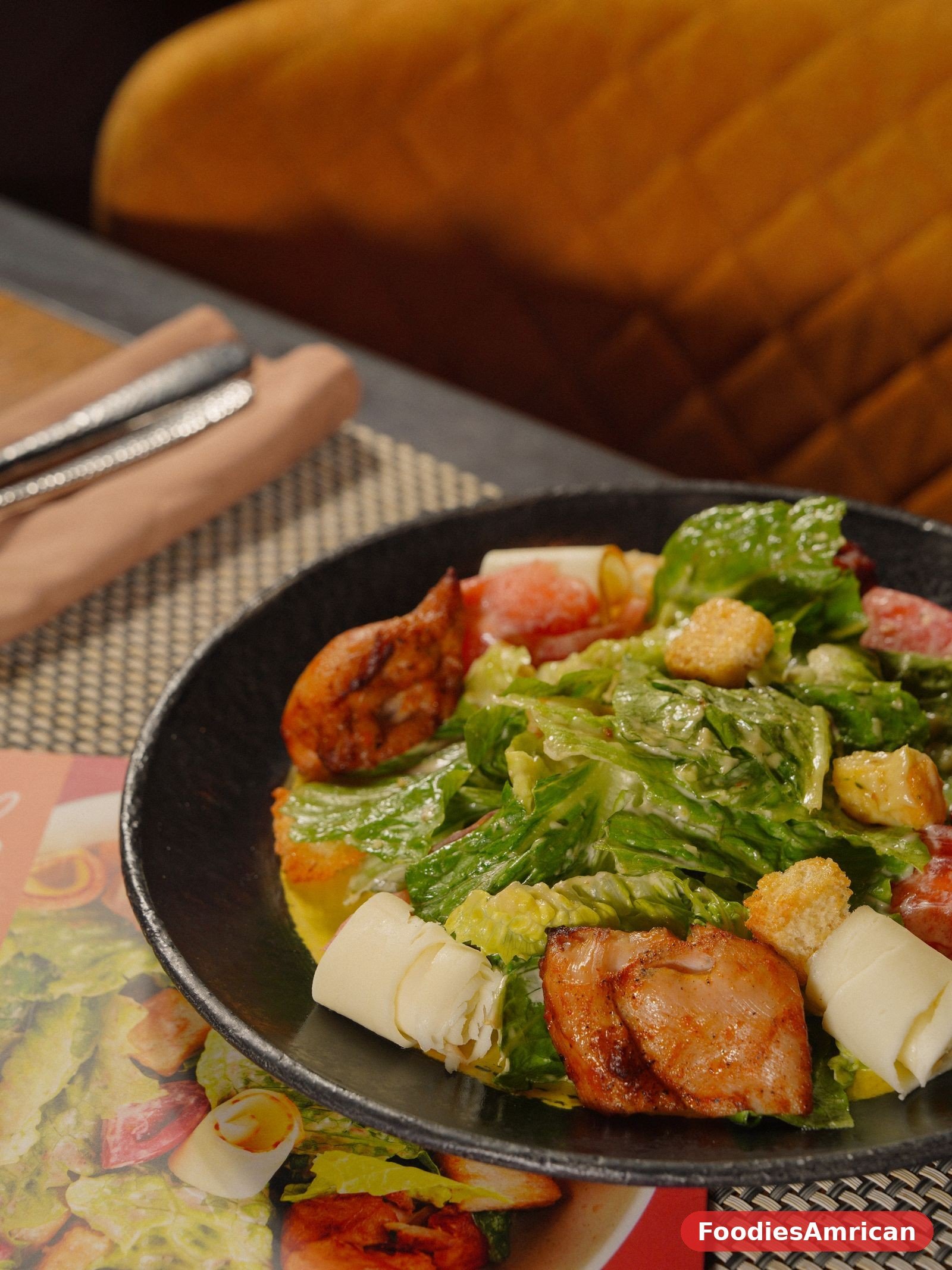
A classic Caesar salad is a natural starter for a dinner party, served in small bowls or on chilled plates before the main course arrives. It wakes up the appetite without filling anyone up, and it looks elegant with its pale green leaves, golden croutons, and snowy shavings of Parmesan. A small glass of white wine alongside is a lovely touch, and the whole thing feels like a restaurant course rather than a home-cooked salad — which is exactly the effect you want when guests are at the table.
As a side dish, it belongs next to a grilled steak, a piece of roast chicken, a pork chop, or a fillet of fish, where its cool, creamy crunch balances the rich, hot main course. It is also a wonderful partner for pasta — a bowl of Caesar salad next to a plate of spaghetti or a serving of lasagna is a classic Italian-American combination that never goes out of style. For a lighter lunch, a big bowl of Caesar salad with a piece of crusty bread is all you need, and it is the kind of lunch that leaves you satisfied rather than sluggish.
For a full meal, top the salad with grilled chicken, shrimp, or salmon, and serve it with a warm roll or a slice of garlic bread. It is a dinner that comes together quickly, it is lighter than a meat-and-potatoes plate, and it is the sort of meal that feels both indulgent and sensible at the same time. If you are planning a menu around it, our homemade chicken ranch wraps make a great lunch companion, and our easy cheesy beef tacos are a fun, family-friendly main course that pairs surprisingly well with a cold, crisp Caesar on the side.
Storage and Reheating
Caesar salad is a dish that is meant to be eaten fresh, and it does not store well once it has been dressed — the lettuce wilts, the croutons soften, and the dressing soaks into everything. So the storage advice here is really about the components, not the finished salad. Keep the washed, dried romaine in a bag lined with a paper towel in the fridge, and it will stay crisp for three to four days. Keep the dressing in a jar with a tight lid in the fridge for up to five days, and give it a good shake or whisk before using it, because it may thicken and separate slightly as it sits. Keep the croutons in an airtight jar at room temperature for up to a week, and they will stay crisp.
If you have leftover dressed salad, it is best eaten within a few hours, and even then the texture will have changed — the croutons will be soft and the lettuce will have wilted. It will still taste fine, and there is no reason to throw it away, but it will not be the salad it was when it was freshly tossed. A better plan is to dress only what you will eat, and keep the rest of the components separate for the next day. A fresh Caesar salad made from stored components takes about three minutes to assemble, and it will taste as good as the first one.
The dressing itself freezes poorly, so do not freeze it — the emulsion will break when it thaws, and no amount of whisking will fully bring it back. The croutons, on the other hand, freeze very well: spread them on a baking sheet, freeze until solid, then transfer them to a freezer bag, and they will keep for up to two months. Thaw them at room temperature for a few minutes, or crisp them up in a warm oven for three or four minutes, and they will be as good as fresh. And if you have leftover dressing, it is wonderful as a sandwich spread, a dip for vegetables, or a sauce for grilled chicken — it is far too good to waste.
Frequently Asked Questions
Does Caesar dressing have raw egg in it?
The classic dressing is made with raw egg yolks, which is what creates the rich, creamy emulsion. This recipe calls for pasteurized egg yolks, which are heated just enough to kill bacteria while still behaving like raw yolks in the dressing, so you get the classic texture with no safety concerns. If you cannot find pasteurized eggs, or if you would rather not use raw egg at all, you can make an excellent version with mayonnaise as the base — whisk half a cup of good mayonnaise with the garlic, anchovy paste, lemon juice, mustard, Worcestershire sauce, and Parmesan, and you will have a delicious dressing without any raw egg.
What can I use instead of anchovy paste?
Anchovy paste is the traditional choice, and it is worth using if you can find it — it keeps for months in the fridge and a tube lasts a very long time. If you cannot find it, four minced anchovy fillets from a tin are the same thing, or you can use a tablespoon of finely minced capers for a similar salty, briny note. An extra splash of Worcestershire sauce, which itself contains anchovy, will also help. But do try the anchovy paste if you can: it melts into the dressing and tastes savory, not fishy, and it is the ingredient that makes the dressing taste like a true Caesar.
Can I make Caesar salad ahead of time?
You can prepare all of the components ahead — the dressing will keep for up to five days in the fridge, the croutons for a week in a jar, and the washed, dried romaine for three to four days in the fridge — but you should not toss the salad together until the moment you are ready to serve it. A dressed Caesar salad wilts quickly, and the croutons go soft within minutes. Assemble it at the last minute, and it will be crisp, fresh, and perfect. If you are serving a crowd, set the components out separately and let people build their own salads, which is both practical and fun.
Why is my Caesar dressing too thin?
The most common cause is adding the oil too quickly, which prevents a proper emulsion from forming. The oil needs to go in as a slow, thin drizzle while the blender is running, so the yolks can absorb it gradually. If your dressing is already thin, you can rescue it: put a fresh egg yolk in a clean bowl, and whisk the thin dressing into it a spoonful at a time, very slowly, until the emulsion catches and the dressing thickens. It is a little fussy, but it works, and it is a good trick to know. Next time, drizzle the oil more slowly and you will not need the rescue.
Can I use kale or another green instead of romaine?
Yes, kale makes a wonderful Caesar, and it is sturdier than romaine, so it holds up better if the salad needs to sit for a while. Remove the tough stems, chop the leaves, and massage them with a little olive oil and salt for a minute to soften them before dressing. Little gem lettuce is another excellent choice — it is essentially a small, sweet romaine, and it looks beautiful in a salad. Avoid soft lettuces like butter lettuce or spring mix, which wilt too quickly under a rich dressing and do not give you the crunch that a Caesar salad needs.
What should I serve with Caesar salad?
It is a classic starter or side for grilled steak, roast chicken, salmon, or pasta, and it is wonderful as a light lunch on its own or topped with grilled chicken or shrimp for a full meal. For a complete, crowd-pleasing dinner, serve it alongside our air fryer mozzarella sticks as a starter, and finish the meal with our classic chocolate layer cake for dessert — the crisp, savory salad, the golden, cheesy starter, and the rich chocolate cake make a menu that feels like a celebration from start to finish.


